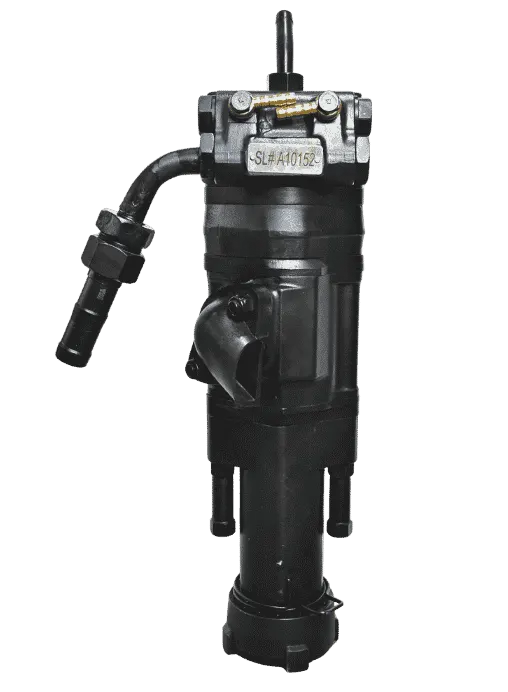
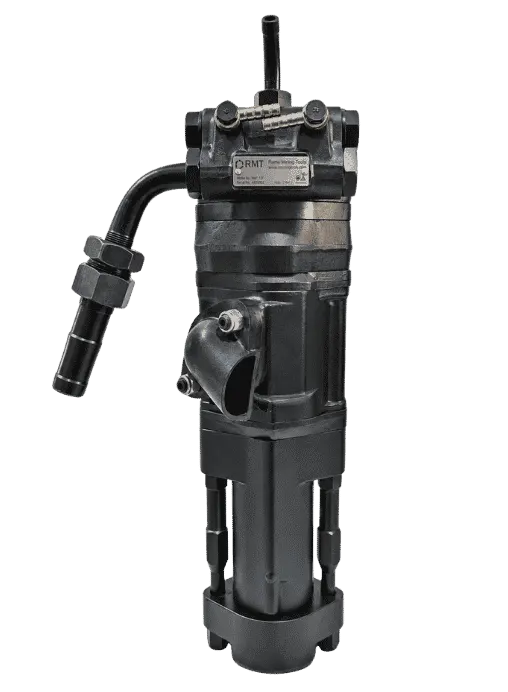
Pneumatic Drifter

Pneumatic Drifter – Atlas Copco BBC 120F Equivalent

Rama Mining Tools (RMT) is a manufacturer and exporter of pneumatic drifters used across underground mining, surface mining, and construction. We make two variants — the RMT 120F and the RMT 120FZ — both built as OEM equivalents to the Epiroc BBC 120F and BBC 120FZ (formerly Atlas Copco).

Read More

A pneumatic drifter is not a standalone machine. It's the drilling unit that gets mounted onto a rig like a Wagon Drill, Crawler Drill, or Simba Junior long-hole drilling machine. The drifter itself does the actual hammering, rotating, and hole-making — the rig just carries it and moves it into position.

Perforadora neumática: la RMT 120F y 120FZ son equipos equivalentes a las perforadoras neumáticas Epiroc BBC 120F y BBC 120FZ, utilizadas en minería subterránea, tunelería y construcción.

RMT 120F vs RMT 120FZ — Which One Do You Need?

The RMT 120F and RMT 120FZ share the same core drilling system — same piston, same impact mechanism, same rifle-bar rotation. The spare parts are also the same across both models, except for a small number of parts.

The real difference between the two is in the body design. The 120FZ uses a longer side bolt, which holds the whole drifter body together along with the front head retainer. This gives the 120FZ more stability during high-vibration drilling.

This is exactly why the 120FZ is the preferred choice for underground drilling. Underground mining work usually means long, continuous working hours on the drill, and that extended vibration exposure is where the 120FZ's stronger body design holds up better than the standard 120F. T

The 120F, without this reinforced side bolt, works well for surface drilling — quarries, open-pit mining, and construction sites — where drilling sessions are typically shorter and less continuous.

However, the 120F Pneumatic Drifter is far more popular than the 120FZ, as practically it is known to everyone, and they prefer this model for both underground mining and quarry operations over 120FZ.

Built-in — Water and Air Flushing

Both RMT drifters come with water and air flushing, and switching between the two is simple. This matters because the flushing method changes what's right for the job:

  • Air flushing clears rock dust and cuttings out of the hole using compressed air. It's quick, doesn't need a water source, and works well in dry ground.
  • Water flushing pushes cuttings out using water instead of air. It also helps keep dust levels down, which matters for operator health in enclosed or underground spaces, and it helps cool the drill during long drilling runs.

Since the RMT 120F and 120FZ can switch between the two without needing a different machine, you're not locked into one method—you can match the flushing type as per the ground conditions and site rules on any given day.

Rifle-Bar Rotation System - Both Ways Rotation

The RMT drifter runs on a rifle-bar-actuated rotation motor with eight pawls — four engaging in each direction. This gives the drill reversible, remote-controlled rotation, so the operator can switch drilling direction without stopping the machine.

This is a bigger deal than it sounds. If a drill rod gets stuck or jammed in rock, being able to reverse rotation instantly — without shutting down and restarting — saves real time on site and reduces wear on the rod and the drifter itself.

It is a rare feature, as even most of the advanced rock drills lack the feature of both side rotation

The RMT pneumatic drifter also uses a modular sectional assembly. This means it can be taken apart in sections for servicing and inspection, instead of needing to strip the whole unit. In underground environments where downtime is expensive, this cuts maintenance time noticeably.

Where RMT Pneumatic Drifters Are Used

  • Underground mining — drilling blast holes deep inside mine drifts and stopes
  • Drifting and tunnelling — cutting horizontal passages through hard rock
  • Long-hole drilling — deep, narrow production holes
  • Bench drilling — repeated hole patterns across an open-pit mining bench
  • Ring drilling and face drilling — radial hole patterns used in underground stope development
  • Grouting holes — for ground stabilisation in surface mining and construction
  • Top hole drilling for furnaces — a more specialised industrial application some buyers search for directly

Pneumatic Drifter vs. Hydraulic Drifter — Which Should You Choose?

This is one of the most common questions buyers ask before picking a drifter, so it's worth laying out clearly.

Pneumatic drifters — where they win:

  • Lower cost — both to buy and to run, compared to hydraulic equivalents
  • Simpler to maintain — fewer moving parts, and a trained operator can service most issues on-site with basic tools
  • Safer in explosive-risk zones — no electrical components involved, which matters in coal mines and gassy underground environments
  • Easier to source spares – pneumatic parts are lighter, cheaper to ship, and widely stocked, which matters a lot for export markets and remote sites
  • Lighter and more portable — easier to mount on smaller rigs and move between sites

Hydraulic drifters — where they win:

  • Higher drilling speed — they deliver more impact energy per blow, so they cut through hard rock faster
  • Better energy efficiency — hydraulic systems convert more of the input power into actual drilling work, which lowers fuel cost per metre drilled over a large job
  • Quieter operation — noticeably less noise than pneumatic equivalents, which matters for operator comfort over long shifts
  • Better for large-scale, high-volume operations — where the higher upfront cost pays back through faster output

For most quarry work, mid-size mining operations, construction sites, and export buyers working in remote or budget-conscious markets, a pneumatic drifter like the RMT 120F/120FZ gives the better balance of cost, simplicity, and easy maintenance.

Hydraulic drifters make more sense for large, well-funded operations drilling high volumes of hard rock where drilling speed directly affects project economics.

Not sure which drifter fits your operation? Contact us to get a free recommendation from the experts.

Why Choose RMT Pneumatic Drifters

  • 100% OEM equivalent to Epiroc BBC 120F and BBC 120FZ.
  • Spare parts are fully interchangeable with the original equipment
  • Water and air flushing, switchable on the same unit
  • Reversible, remote-controlled rifle-bar rotation
  • Modular sectional design for faster servicing
  • 6-month replacement warranty on manufacturing defects
  • 25+ years of experience manufacturing and exporting pneumatic mining tools
  • Two builds available — one for surface work, one for underground work

The RMT 120F is a 100% OEM equivalent to the Epiroc BBC 120F (formerly Atlas Copco), with reference OEM part numbers 8311080001 and 3161900004.

The RMT 120FZ is a 100% OEM equivalent to the Epiroc BBC 120FZ, with reference OEM part number 3115223900.

Both can be used in the same rigs — Wagon Drill, Crawler Drill, and Simba Junior.

Need a BBC 120F equivalent pneumatic drifter? Contact us toe get a quote with immediate ready-to-ship 120F pneumatic drifters